How to Apply for the CAIBS Certification: Step-by-Step Guide to Becoming a Certified AI Business Strategist
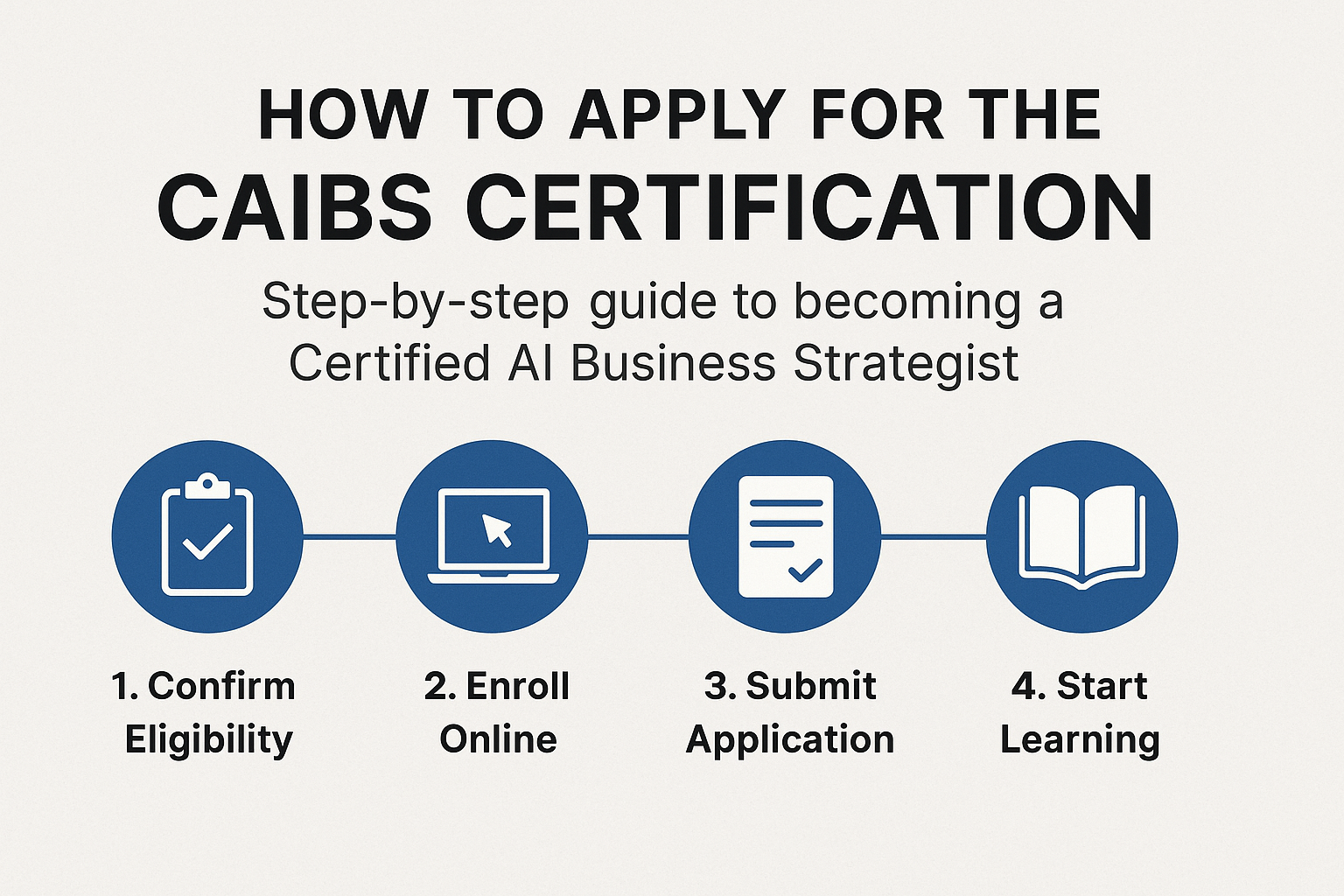
The Certified AI Business Strategist (CAIBS) program is one of the fastest-growing AI strategy certifications for professionals in 2025. If you've been thinking about becoming certified, you're not alone, keyword searches for “how to apply for the CAIBS certification” have been rising rapidly in recent months.
The good news? Applying for CAIBS is easy, quick, and accessible, no formal prerequisites, no waiting list, and no technical background required.
This guide walks you through exactly how to apply for the CAIBS certification, what you'll need, and what to expect once you're enrolled.
Why Apply for CAIBS Now?
Before we dive into the how-to, here’s why learners from 20+ countries are applying for the CAIBS certification right now:
- Global demand for AI-literate business leaders
- Career ROI in strategic, non-technical AI roles
- Practical toolkits for AI transformation
- Leadership-ready frameworks for AI change
- Fully online, flexible, and instantly accessible
Whether you’re in HR, marketing, finance, operations, or consulting, CAIBS helps you strategise and lead with AI.
Step 1: Confirm You Meet the CAIBS Eligibility Criteria
Here’s the great part: There are no technical or academic barriers.
| Requirement | Needed |
|---|---|
| Coding or AI tech background | Not required |
| College degree | Not required |
| Business experience | Preferred (1–2+ years) |
| English proficiency | Recommended |
If you're a manager, strategist, or decision-maker looking to lead AI projects, you're eligible.
Step 2: Choose Your CAIBS Enrollment Option
The CAIBS program is offered exclusively through The Case HQ, and is available in a self-paced format, which includes:
- Lifetime access
- Full toolkit downloads
- AI Strategy certificate with verification ID
- Unlimited re-attempts of the final assessment
Program Fee: $102 USD (one-time payment)
Tip: Some companies reimburse this as part of professional development. Check with HR!
Step 3: Visit the Official CAIBS Course Page
Head to the official CAIBS certification page here:
https://thecasehq.com/courses/certified-ai-business-strategist/
There, you can:
- Read the course overview
- View the full module list
- Check sample toolkits and testimonials
- Click “Enroll Now” to begin
Step 4: Fill Out the Simple Sign-Up Form
The application process is streamlined, no essays, no interviews. You'll just need to:
- Enter your name and email
- Create a secure password
- Provide payment details
- Receive immediate confirmation
In under 5 minutes, you’ll get access to your learner dashboard and all modules.
FAQs: How to Apply for the CAIBS Certification
Q: Do I need a background in AI or machine learning?
A: No. The course is 100% business-focused, with no coding required.
Q: Can I start immediately after applying?
A: Yes. As soon as payment is confirmed, you can access the course content.
Q: Is there a deadline to finish?
A: No. You can learn at your own pace and come back anytime.
Q: Is it globally recognised?
A: Yes. The CAIBS certificate is accepted by employers and institutions globally and includes a verifiable credential ID.
Ready to Invest in Your Future?
Enrol in the CAIBS Program Today
Visit The Case HQ for 95+ courses
Read relevant posts at:
What is CAIBS? A Strategic AI Certification Explained
Certified AI Business Strategist (CAIBS): A Complete Guide
Inside the CAIBS Course: What You’ll Learn
Why CAIBS is the #1 Choice for AI Business Professionals
Certified AI Business Strategist (CAIBS): Career ROI
Is CAIBS Right for You? Eligibility & Readiness
https://thecasehq.com/how-to-apply-for-the-caibs-certification-step-by-step-guide-to-becoming-a-certified-ai-business-strategist/?fsp_sid=3509
Comments
Post a Comment