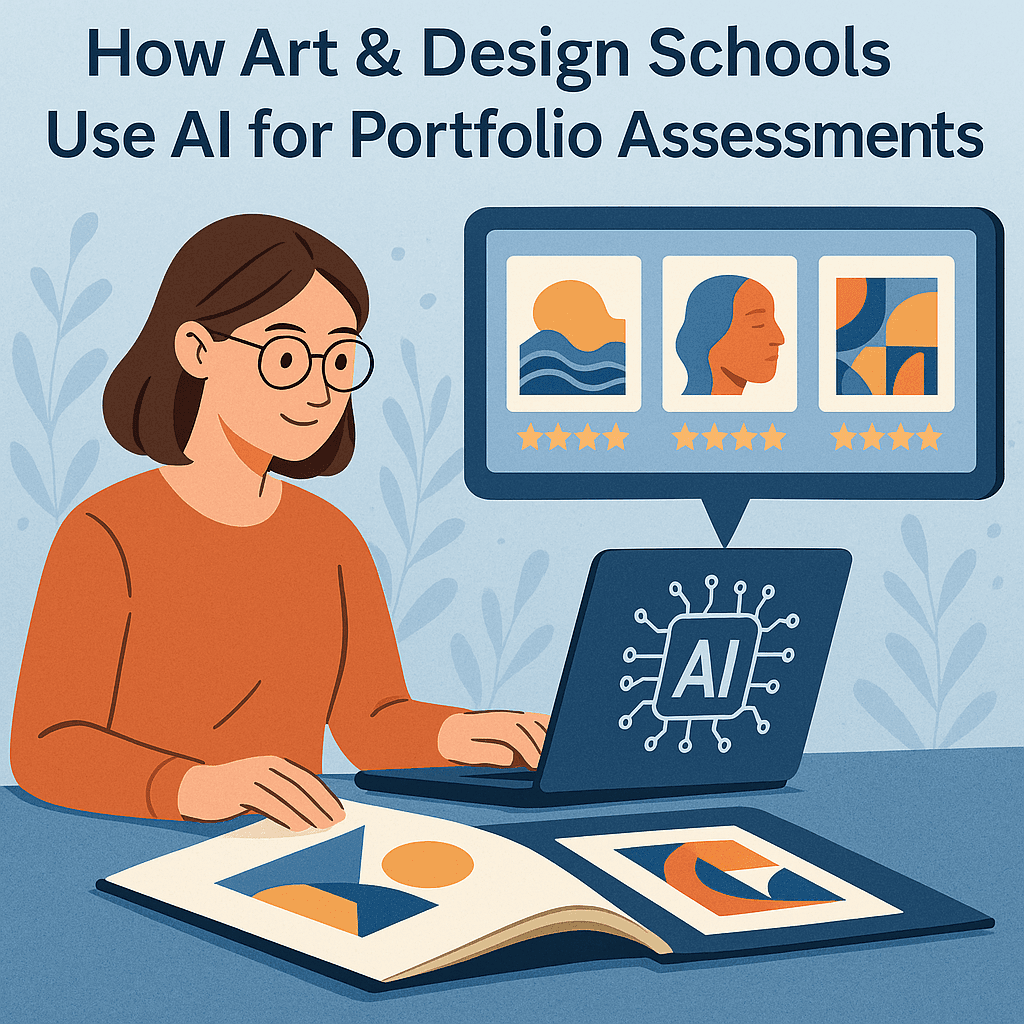
Art and design schools use AI for portfolio assessments to bring innovation, consistency, and scalability into what has traditionally been a highly subjective and manual process. As creativity increasingly meets technology, institutions are leveraging artificial intelligence to assess design work, provide feedback, and guide students on their creative journey.
Portfolios are central to art and design education. They reflect not only technical skill but also concept development, visual storytelling, and personal expression. However, assessing such multidimensional work has always posed challenges. Human-led evaluation is time-consuming, influenced by bias, and often varies between reviewers. By integrating AI, art schools aim to streamline evaluations while maintaining high-quality, personalised feedback.
Why CAIBS Is the #1 Choice for AI Business Professionals in 2025
Why Art and Design Schools Use AI for Portfolio Assessments
There are several reasons why art and design schools use AI for portfolio assessments:
- Efficiency: AI significantly reduces the time required to assess multiple portfolios, particularly for large application cycles or course projects.
- Consistency: Algorithms apply criteria uniformly, reducing the subjectivity that often comes with human judgement.
- Actionable Feedback: AI tools can generate formative feedback instantly, helping students improve their work while still in the development stage.
- Bias Reduction: AI can help mitigate unconscious bias by focusing solely on the quality and structure of the work submitted, regardless of the student's background or presentation style.
Real-World Examples
1. UAL’s Integration of AI for Pre-Screening Applications
The University of the Arts London (UAL) began piloting AI tools to support the initial screening of digital portfolios. The AI analyses visual balance, image quality, and layout consistency, helping admissions teams shortlist applicants more efficiently while ensuring that all candidates are reviewed using the same criteria.
2. Parsons School of Design and AI-Driven Feedback
Parsons has explored using AI to provide real-time feedback to students during portfolio development. For example, AI tools analyse colour theory, visual harmony, and compositional elements, suggesting ways to refine digital pieces before final submission.
3. Rhode Island School of Design (RISD) and AI for Pattern Recognition
RISD is experimenting with AI-based analytics to identify learning trends and patterns across cohorts. For example, AI detects which portfolio styles correlate with higher project grades or post-graduation employment, feeding data into both assessment and curriculum development.
4. Adobe Creative Cloud + Sensei AI
Many art schools integrate Adobe products into their curriculum. Adobe Sensei, Adobe’s AI engine, can now analyse digital artwork to suggest improvements in composition, symmetry, and spacing. Instructors use this as a support tool in student critiques.
AI-Powered Techniques Used in Portfolio Evaluation
1. Image Recognition & Analysis
AI tools can assess portfolio elements like contrast, colour use, image alignment, spacing, and typography. These tools help students understand how well they are applying visual principles and offer targeted suggestions.
2. Generative Feedback
Natural Language Processing (NLP) models can review written artist statements and project descriptions, suggesting more coherent phrasing, structure, and alignment with portfolio content.
3. Visual Similarity Detection
AI helps ensure originality by comparing submissions with large datasets to identify plagiarism or excessive referencing. This supports academic integrity in creative disciplines.
4. Annotation and Layer Analysis
Some platforms allow students to submit layered design files (e.g., PSD, AI). AI tools analyse each layer to evaluate how a student constructed their design—providing insight into technique, creativity, and process.
Benefits of AI in Portfolio Assessment
- Faster Review Cycles: Institutions can handle thousands of portfolios during peak periods without compromising quality.
- Enhanced Learning: Students receive structured feedback while still iterating on their designs, not just at the final submission stage.
- Data-Informed Judgements: Faculty can use dashboards to view trends across programmes, helping them tailor learning interventions.
- Inclusive Practice: By focusing on work characteristics rather than demographic details, AI promotes fairer assessments.
Ethical and Pedagogical Considerations
While the benefits are substantial, art and design schools using AI for portfolio assessments must proceed with caution:
- Maintain Human Oversight: Final grading and admissions decisions should always include human review to honour creative nuance.
- Avoid Over-Standardisation: Creativity cannot be reduced to metrics alone. AI must support—not limit—unique artistic expression.
- Transparency in Use: Students should know when AI is used, what data is collected, and how it affects their academic evaluation.
Conclusion
As art and design schools use AI for portfolio assessments, they are redefining how creativity is nurtured and measured. By blending technology with human insight, schools can provide more timely, personalised, and equitable feedback—enhancing the educational experience without compromising artistic freedom.
In a world where design is increasingly digital, AI offers the tools needed to assess, inspire, and elevate the next generation of creative professionals.
Visit The Case HQ for 95+ courses
Read More:
Game-Changing Power of Automating Constructive Feedback Using LLMs in Education
Critical Ethical Considerations in AI-Based Testing Every Educator Must Know
How to Build a Powerful AI-Enabled Assessment Ecosystem for Future-Ready Learning
How AI Simplifies Grading and Reporting Workflows for Educators and Institutions
AI Assessment in STEM vs Humanities: Key Differences Every Educator Should Understand
AI in Early Childhood Education: Promises and Pitfalls
How AI is Shaping the Role of Educators in the 21st Century
AI and Special Education: Customizing Learning for Every Student
The Art of Crafting Compelling Case Studies: Tips for Success
How to Use Case Studies to Showcase Your Expertise
A Step-by-Step Guide to Writing Impactful Business Case Studies
https://thecasehq.com/innovative-ways-art-design-schools-use-ai-for-portfolio-assessments/?fsp_sid=985
Comments
Post a Comment