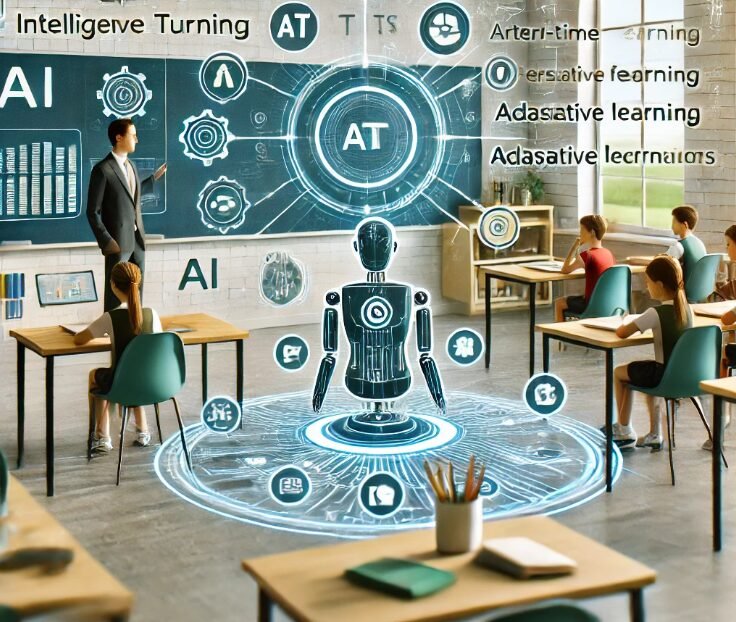
In recent years, education has witnessed a significant transformation driven by the integration of Artificial Intelligence (AI) into learning environments. Among the most promising AI-driven innovations are Intelligent Tutoring Systems (ITS). These systems are revolutionizing the way students learn by providing personalized, interactive, and real-time support that was once only possible through one-on-one tutoring. As we enter a new era in education, ITS is poised to play a central role in enhancing student learning outcomes and making education more accessible to all.
What Are Intelligent Tutoring Systems?
Intelligent Tutoring Systems (ITS) are AI-powered educational tools designed to simulate the benefits of human tutoring by providing personalized instruction and feedback to students. These systems use complex algorithms to assess a student's current understanding of a subject, identify gaps in knowledge, and adapt lessons accordingly. ITS can interact with students in real-time, offering hints, explanations, and corrective feedback based on the student's responses.
Unlike traditional teaching methods that often apply a uniform approach to all students, ITS tailors the learning experience to meet individual needs. This level of personalization helps students stay engaged, promotes deeper understanding, and ensures that each learner can progress at their own pace.
How ITS Is Transforming Education
1. Personalized Learning
One of the most significant advantages of ITS is its ability to provide personalized learning experiences. By analyzing a student's performance, ITS can identify areas where the student is struggling and offer targeted instruction to address those specific challenges. This personalized approach ensures that students receive the right level of difficulty and support, helping them master complex concepts more effectively.
For instance, if a student consistently struggles with a particular math concept, an ITS can provide additional practice problems, offer step-by-step explanations, and adjust the level of difficulty until the student grasps the material. This individualized attention was previously only available through one-on-one tutoring, but ITS makes it accessible to all students.
2. Real-Time Feedback and Adaptive Learning
ITS offers real-time feedback, which is crucial for effective learning. Traditional classroom settings often involve delays between when a student completes an assignment and when they receive feedback. This delay can hinder learning, as students may not fully understand their mistakes or misconceptions. ITS addresses this issue by providing immediate feedback, allowing students to correct their errors on the spot and reinforcing the correct understanding of the material.
Moreover, ITS employs adaptive learning techniques, meaning the system continually adjusts its teaching strategies based on the student's progress. If a student demonstrates proficiency in a certain area, the ITS can introduce more advanced topics to keep the student challenged and engaged. Conversely, if a student struggles, the system can slow down, provide additional explanations, or revisit foundational concepts to ensure comprehension.
3. Scalability and Accessibility
One of the most transformative aspects of ITS is its scalability. Unlike traditional tutoring, which requires significant time and resources, ITS can be deployed across large numbers of students with minimal cost. This scalability makes high-quality, personalized education accessible to a broader audience, including students in under-resourced schools or remote areas.
The Impact of Real-World Scenarios in Business Education
Additionally, ITS can be accessed anytime and anywhere, providing flexibility that traditional classroom settings cannot match. Students can engage with the system at their own pace and on their own schedule, making it easier to balance education with other responsibilities.
4. Supporting Educators
While ITS is a powerful tool for students, it also offers significant benefits for educators. By automating routine tasks such as grading and providing feedback, ITS allows teachers to focus more on higher-order instructional activities, such as facilitating discussions, providing mentorship, and designing creative learning experiences.
Moreover, ITS can provide educators with valuable insights into each student's progress, helping them identify students who may need additional support or intervention. This data-driven approach enables teachers to make more informed decisions about their teaching strategies and resource allocation.
The Future of Intelligent Tutoring Systems
As AI technology continues to evolve, the capabilities of ITS are expected to expand even further. Future developments may include more sophisticated natural language processing, enabling ITS to engage in more complex conversations with students, and enhanced emotional recognition, allowing the system to adapt its approach based on a student's emotional state.
However, it is essential to remember that while ITS offers many benefits, it should complement, not replace, human teachers. The role of educators remains crucial in providing the empathy, critical thinking, and human interaction that AI cannot replicate.
Conclusion
The rise of Intelligent Tutoring Systems marks a new era in education, where personalized learning, real-time feedback, and scalability are becoming more achievable than ever before. By leveraging the power of AI, ITS is making high-quality education accessible to all students, regardless of their background or location. As we continue to explore the potential of ITS, it is clear that these systems will play a vital role in shaping the future of education, offering students the support they need to succeed in an increasingly complex world.
Visit The Case HQ for 95+ courses
Read More:
Understanding the Importance of Case Studies in Modern Education
The Impact of Real-World Scenarios in Business Education
The Power of Field Case Studies in Understanding Real-World Businesses
How to Use Case Studies to Enhance Your Classroom Teaching Experience
Case Studies vs. White Papers: What’s the Difference and When to Use Each?
How Published Research Transforms Technological Advancements
https://thecasehq.com/the-rise-of-intelligent-tutoring-systems-a-new-era-in-education/?fsp_sid=688
Comments
Post a Comment