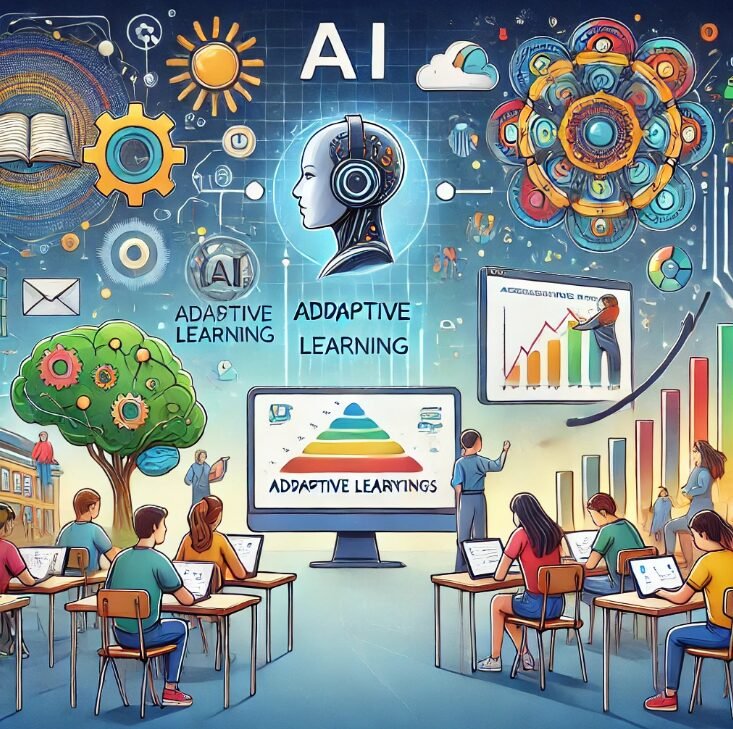
The landscape of education is undergoing a significant transformation, driven in large part by the integration of Artificial Intelligence (AI). One of the most profound changes is occurring in the realm of student assessment. Traditional methods, such as standardized tests, have long been the cornerstone of educational evaluation. However, these methods are increasingly being challenged by AI-driven technologies that promise to deliver more personalized, adaptive, and accurate assessments. This blog explores how AI is reshaping the future of assessment, moving us from a one-size-fits-all approach to more dynamic, student-centered models.
The Limitations of Standardized Tests
Standardized tests have been a staple in education for decades, providing a uniform measure of student achievement. These tests are designed to assess large groups of students in a consistent manner, ensuring comparability of results across different schools and regions. However, this uniformity is also one of the greatest limitations of standardized tests.
Standardized tests often fail to account for individual differences in learning styles, cultural backgrounds, and socio-economic contexts. They tend to prioritize rote memorization over critical thinking and problem-solving skills. Furthermore, the high stakes associated with standardized testing can lead to test anxiety, which may negatively impact student performance and does not accurately reflect a student’s true abilities.
The Rise of AI in Assessment
AI is poised to address many of the shortcomings of traditional assessment methods by offering more flexible and adaptive approaches. AI-driven assessments are capable of analyzing a vast array of data points, including how a student interacts with test materials, the time taken to answer each question, and patterns in responses. This data can be used to create a detailed profile of a student's strengths, weaknesses, and learning preferences.
Adaptive Learning Systems
One of the most promising applications of AI in assessment is adaptive learning systems. These systems use AI algorithms to adjust the difficulty of questions in real-time based on a student's performance. If a student answers a question correctly, the system presents a more challenging question next. Conversely, if the student struggles, the system provides easier questions or additional resources to help the student understand the concept.
This adaptive approach ensures that assessments are tailored to the individual needs of each student, providing a more accurate measure of their abilities. It also helps keep students engaged by presenting them with appropriately challenging tasks, rather than frustrating them with content that is too difficult or boring them with content that is too easy.
Continuous and Formative Assessment
AI also enables continuous and formative assessment, moving beyond the traditional model of end-of-term exams or standardized tests. With AI, assessment becomes an ongoing process, where student progress is monitored in real-time, and feedback is provided continuously. This allows educators to identify learning gaps as they occur and intervene promptly to address them.
Formative assessments, powered by AI, can offer immediate feedback, helping students understand their mistakes and learn from them. This real-time feedback loop not only enhances learning but also reduces the pressure associated with traditional high-stakes testing.
Reducing Bias in Assessment
AI has the potential to reduce biases that are often present in human grading. By using standardized algorithms to evaluate student work, AI can minimize the influence of subjective factors, such as a grader's mood or unconscious biases. However, it's important to note that AI systems themselves are not immune to bias. The data used to train AI models must be carefully curated to avoid perpetuating existing biases.
The Future of AI-Driven Assessment
As AI technology continues to evolve, we can expect to see even more sophisticated assessment tools. Future developments may include AI-driven simulations that assess a student's ability to apply knowledge in real-world scenarios, or AI mentors that provide personalized guidance based on a student's unique learning trajectory.
However, the integration of AI in assessment also raises important ethical considerations. Ensuring data privacy, maintaining transparency in how AI algorithms make decisions, and providing human oversight are critical to the responsible use of AI in education.
Conclusion
The future of assessment in education is being reshaped by AI, moving away from standardized tests towards more adaptive, personalized, and continuous forms of evaluation. These AI-driven assessments offer the potential to better meet the needs of individual learners, providing a more accurate and holistic picture of student achievement. As we continue to explore the possibilities of AI in education, it is essential to approach these innovations with a focus on equity, transparency, and the ultimate goal of enhancing student learning outcomes.
Visit The Case HQ for 95+ courses
Read More:
How AI is Shaping the Role of Educators in the 21st Century
AI and Special Education: Customizing Learning for Every Student
The Art of Crafting Compelling Case Studies: Tips for Success
How to Use Case Studies to Showcase Your Expertise
A Step-by-Step Guide to Writing Impactful Business Case Studies
The Role of Case Studies in Academic Research: Best Practices
Critical Analysis: How Students Use Gen AI for Essay Writing—Should We Be Concerned?
Essential Comparison of CLSSGB vs CSSGB: Which Six Sigma Green Belt Is Right for You?
Powerful Guide to Writing Exam Questions Using Gen AI Effectively
Time-Saving Power of Using ChatGPT to Generate Lesson Plans in Minutes
Essential Guide: What Is Generative AI and Why Should Educators Care?
Innovative Ways Art & Design Schools Use AI for Portfolio Assessments
https://thecasehq.com/ai-and-the-future-of-assessment-from-standardized-tests-to-adaptive-learning/?fsp_sid=1767
Comments
Post a Comment