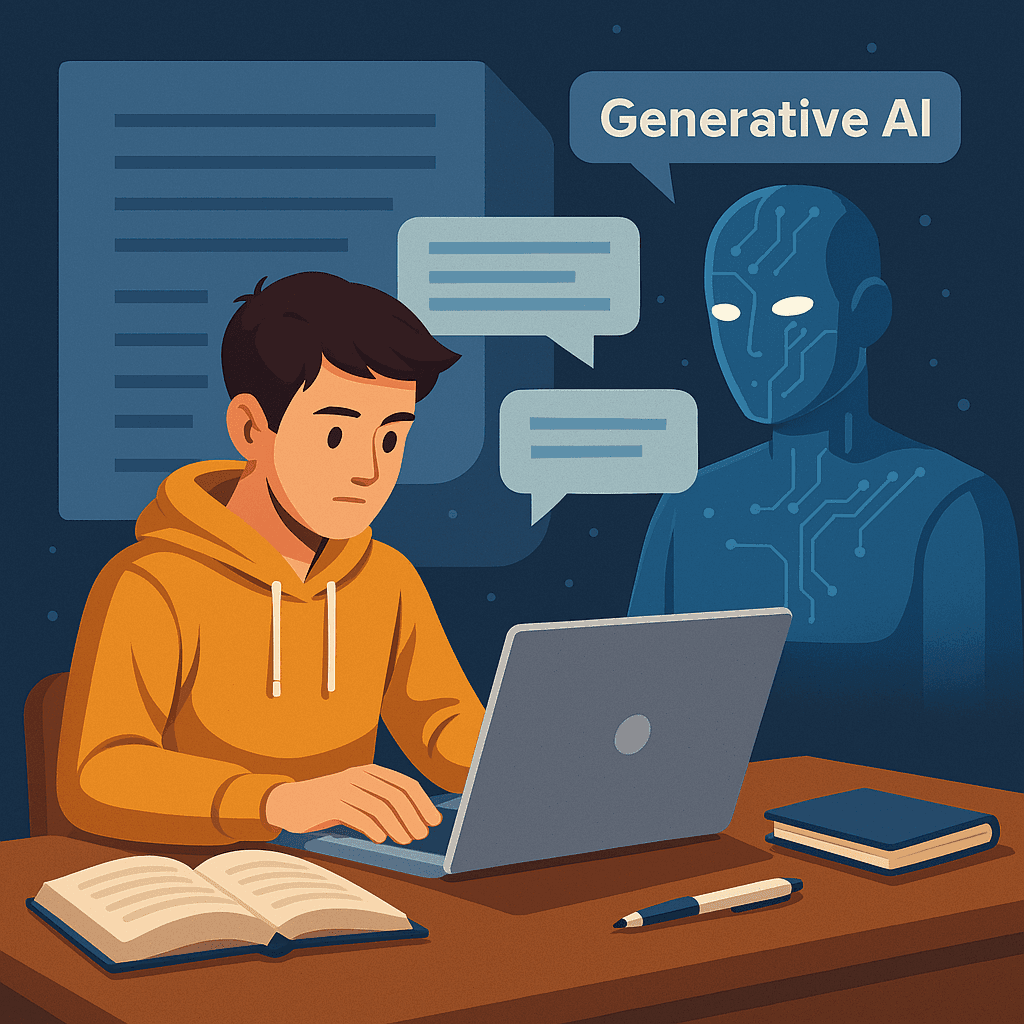
The rise of artificial intelligence in education has brought both excitement and apprehension. One hotly debated topic is how students use Gen AI for essay writing and whether it undermines or enhances the learning process. While AI-powered tools like ChatGPT and Grammarly have the potential to support students in writing tasks, they also raise significant concerns about academic integrity, skill development, and fairness.
Urgent Need for Addressing Bias in AI-Powered Assessment Tools
What Is Generative AI in Essay Writing?
Generative AI refers to AI models designed to produce content based on user prompts. When it comes to essay writing, tools like ChatGPT, Claude, Bard, and WriteSonic can generate essays, summarise articles, suggest thesis statements, and even rephrase existing text for improved clarity.
For example, a student might prompt ChatGPT with:
"Write a 500-word essay on the causes and effects of climate change for high school students."
Within seconds, the AI delivers a well-structured response that includes an introduction, body paragraphs, and a conclusion.
It’s clear that students use Gen AI for essay writing as a tool for brainstorming, drafting, or even completing entire assignments. But is this trend a cause for concern?
Why Students Use Gen AI for Essay Writing
The primary reasons why students use Gen AI for essay writing include:
- Time Efficiency
AI tools can generate content within minutes, helping students who are pressed for time. This is particularly appealing during exam seasons or when managing multiple deadlines. - Writer’s Block Relief
AI offers a starting point for students struggling to formulate ideas. By providing structure or key points, generative AI can help students overcome the intimidation of a blank page. - Language Assistance
For ESL (English as a Second Language) learners, AI tools like Grammarly and ChatGPT offer grammar corrections, vocabulary enhancements, and sentence restructuring to improve clarity and coherence. - Personalised Feedback
Some platforms provide AI-driven feedback on grammar, style, and structure. This allows students to refine their essays before submission, promoting a more polished final product.
Potential Concerns About Generative AI in Essay Writing
While students use Gen AI for essay writing with clear benefits, educators and administrators express legitimate concerns.
- Academic Integrity
If students rely excessively on AI-generated content, it becomes difficult to assess their genuine understanding and writing ability. The concern grows when AI-generated essays are submitted as original work.
Example: A university recently reported an increase in cases where students submitted essays that were entirely AI-generated, with little to no editing. Detection tools like GPTZero and Turnitin AI Detector are now being employed to identify such submissions.
- Skill Development
Relying on AI can hinder the development of critical writing skills such as argumentation, coherence, and creativity. If students bypass the drafting process, they may miss essential opportunities for learning and growth. - Bias and Inaccuracy
Generative AI models can produce content that is biased, outdated, or factually incorrect. Students who accept AI outputs without critical evaluation may unknowingly perpetuate misinformation. - Privacy and Ethical Concerns
Using AI tools that collect user data without consent can expose students to privacy risks. Moreover, ethical considerations arise when AI is used to bypass legitimate learning processes.
Should We Be Concerned About AI-Assisted Essay Writing?
The short answer is yes—but not for the reasons some might think. Instead of dismissing AI as a threat to education, stakeholders should view it as a tool that requires thoughtful integration.
Instead of forbidding AI use outright, educators can teach students how to use generative AI responsibly and ethically. This includes:
- Encouraging Critical Thinking: Students should be taught to fact-check AI-generated content and refine it with their own insights.
- Clarifying Rules: Institutions should establish guidelines about what constitutes acceptable use of AI tools for assignments.
- Teaching AI Literacy: Understanding how AI works, its limitations, and its ethical implications should be part of digital citizenship education.
- Developing Detection Systems: Tools like Turnitin AI Detector and GPTZero help maintain academic integrity while allowing for responsible use of AI.
Practical Solutions and Examples
Example 1: Hybrid Learning Approaches
A high school English teacher allows students to use AI tools like ChatGPT for brainstorming but requires them to submit detailed reflections on how the tool assisted their writing process. This approach encourages students to use AI ethically and transparently.
Example 2: AI Literacy Workshops
Universities are now offering workshops to teach students how to use AI tools like Grammarly and ChatGPT effectively. Instead of penalising usage, these institutions promote AI as a learning aid, provided it is used ethically.
Example 3: AI Detection Tools
Institutions are integrating AI detection systems like Turnitin AI Detector to identify assignments heavily reliant on generative AI. This encourages students to use AI as a supplement, not a replacement, for their own writing efforts.
Final Thoughts
The reality is that students use Gen AI for essay writing because it offers clear benefits in terms of efficiency, creativity, and language support. However, when left unchecked, AI can compromise academic integrity and skill development.
Rather than dismissing AI as a harmful influence, educators should embrace it with a strategic and ethical approach. By teaching students how to use AI responsibly, we can harness its potential for enhancing learning while preserving the core values of education.
Visit The Case HQ for 95+ courses
Read More:
Revolutionary AI-Powered Assessment Tools Are Transforming Education Forever
Practical Applications of Generative AI in Education: Turning Innovation into Daily Practice
The Future of Learning and Assessment: Redefining Education for an AI-Driven Era
Designing the Future Faculty: A Practical Guide to Academic and Faculty Development
Mastering Case Study Writing and Teaching: A Practical Guide for Business Educators
The Future of Education: AI and Digital Transformation in the Classroom
Gamification in Education: Beyond Points and Badges – Strategies That Truly Engage
High-Impact Blended Learning Models That Work in 2025
Game-Changing Power of Automating Constructive Feedback Using LLMs in Education
Critical Ethical Considerations in AI-Based Testing Every Educator Must Know
How to Build a Powerful AI-Enabled Assessment Ecosystem for Future-Ready Learning
https://thecasehq.com/critical-analysis-how-students-use-gen-ai-for-essay-writing-should-we-be-concerned/?fsp_sid=2185
Comments
Post a Comment