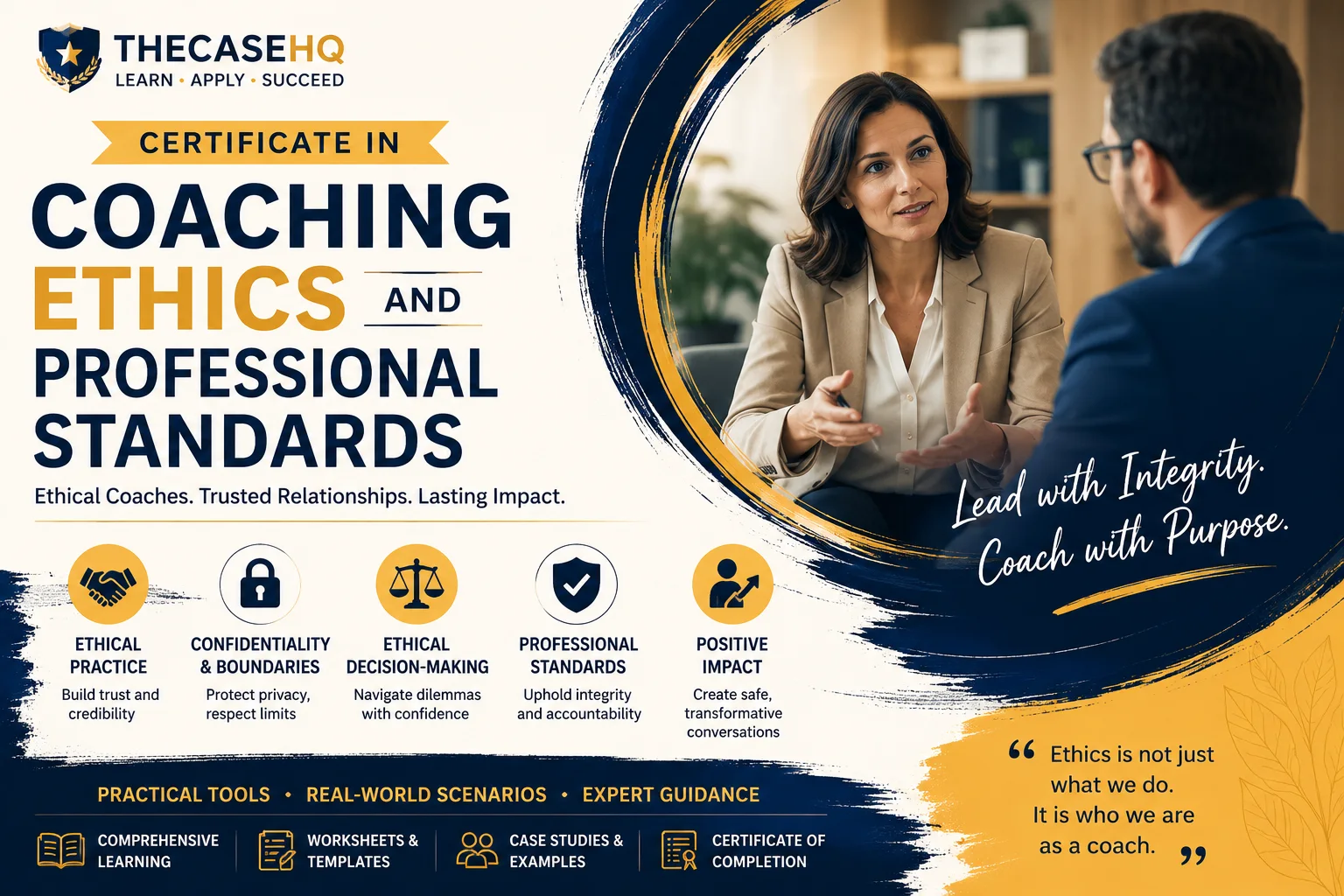
Build Trust. Strengthen Credibility. Master Ethical Coaching Practice.
Coaching Ethics and Professional Standards are what separate a confident, trusted coach from an inconsistent and risky one. This course, Certificate in Coaching Ethics and Professional Standards, is designed to help you develop the judgement, clarity, and professional behaviour required to operate at a high level.
If you want to be recognised as a credible coach whether in organisations, education, leadership, or independent practice mastering Coaching Ethics and Professional Standards is essential.
Why This Course Matters
Most coaching courses focus on:
- Asking questions
- Structuring sessions
- Building rapport
Very few focus deeply on how to make the right decisions when it actually matters.
This course fills that gap.
In real coaching situations, you will face:
- Confidential information
- Ethical dilemmas
- Pressure to give advice
- Blurred professional boundaries
Without strong Coaching Ethics and Professional Standards, even skilled coaches can lose trust, damage relationships, or make poor decisions. This course ensures that does not happen.
What You Will Gain
By completing this course, you will confidently apply Coaching Ethics and Professional Standards in real-world situations.
You will be able to:
- Handle sensitive coaching conversations with confidence
- Maintain confidentiality while managing ethical risks
- Set and protect professional boundaries
- Respond to ethical dilemmas using structured frameworks
- Build trust consistently in every coaching interaction
What Makes This Course Different
Practical, Not Theoretical
You will not just learn definitions of Coaching Ethics and Professional Standards.
You will apply them through:
- Real-world case studies
- Coaching scripts for difficult situations
- Ethical decision-making frameworks
- Reflection workbooks
Designed for Real Coaching Situations
This course prepares you for what actually happens in coaching:
- A coachee asking for direct advice
- A conversation involving organisational risk
- Emotional disclosures that cross boundaries
- Situations where ethics are unclear
You will learn how to respond professionally, not react emotionally.
Immediate Application
Everything in this course is designed to be applied immediately.
You will not need additional tools or training to start using Coaching Ethics and Professional Standards in your conversations.
Who This Course Is For
This course is ideal for:
- New coaches building a strong ethical foundation
- Experienced coaches strengthening professional standards
- Managers and leaders using coaching approaches
- HR and L&D professionals
- Educators and academic coaches
If your role involves influencing, guiding, or developing others, this course is highly relevant.
What You Will Learn
This course covers the complete spectrum of Coaching Ethics and Professional Standards:
Ethical Foundations
Understand the principles that guide professional coaching behaviour.
Confidentiality in Practice
Learn how to manage sensitive information responsibly.
Professional Boundaries
Define your role clearly and avoid overstepping into advice or counselling.
Ethical Decision-Making
Use structured frameworks to handle complex situations.
Managing Difficult Conversations
Respond professionally to challenging and sensitive scenarios.
Learning Experience
This is a self-paced professional certification course designed for maximum flexibility and impact.
You will engage with:
- Structured lessons
- Real-world case studies
- Practical coaching scripts
- Templates and frameworks
- Reflection workbooks
Each component reinforces your understanding of Coaching Ethics and Professional Standards through application.
Career and Professional Value
Mastering Coaching Ethics and Professional Standards significantly enhances your professional profile.
You will:
- Build credibility as a trusted coach
- Demonstrate professional integrity
- Align with global coaching expectations
- Improve your effectiveness in leadership and coaching roles
This course strengthens both your capability and your reputation.
What You Will Walk Away With
At the end of this course, you will have:
- A clear understanding of Coaching Ethics and Professional Standards
- Practical tools to handle ethical challenges
- Confidence in managing complex coaching situations
- A structured approach to professional coaching behaviour
Most importantly, you will be able to coach responsibly, professionally, and confidently.
Final Positioning
Coaching is not only about guiding conversations.
It is about how you think, decide, and act as a professional.
This course ensures that your coaching is not only effective but also ethical, credible, and trusted.
https://thecasehq.com/product/certificate-in-coaching-ethics-and-professional-standards-the-case-hq/?fsp_sid=6287
Comments
Post a Comment