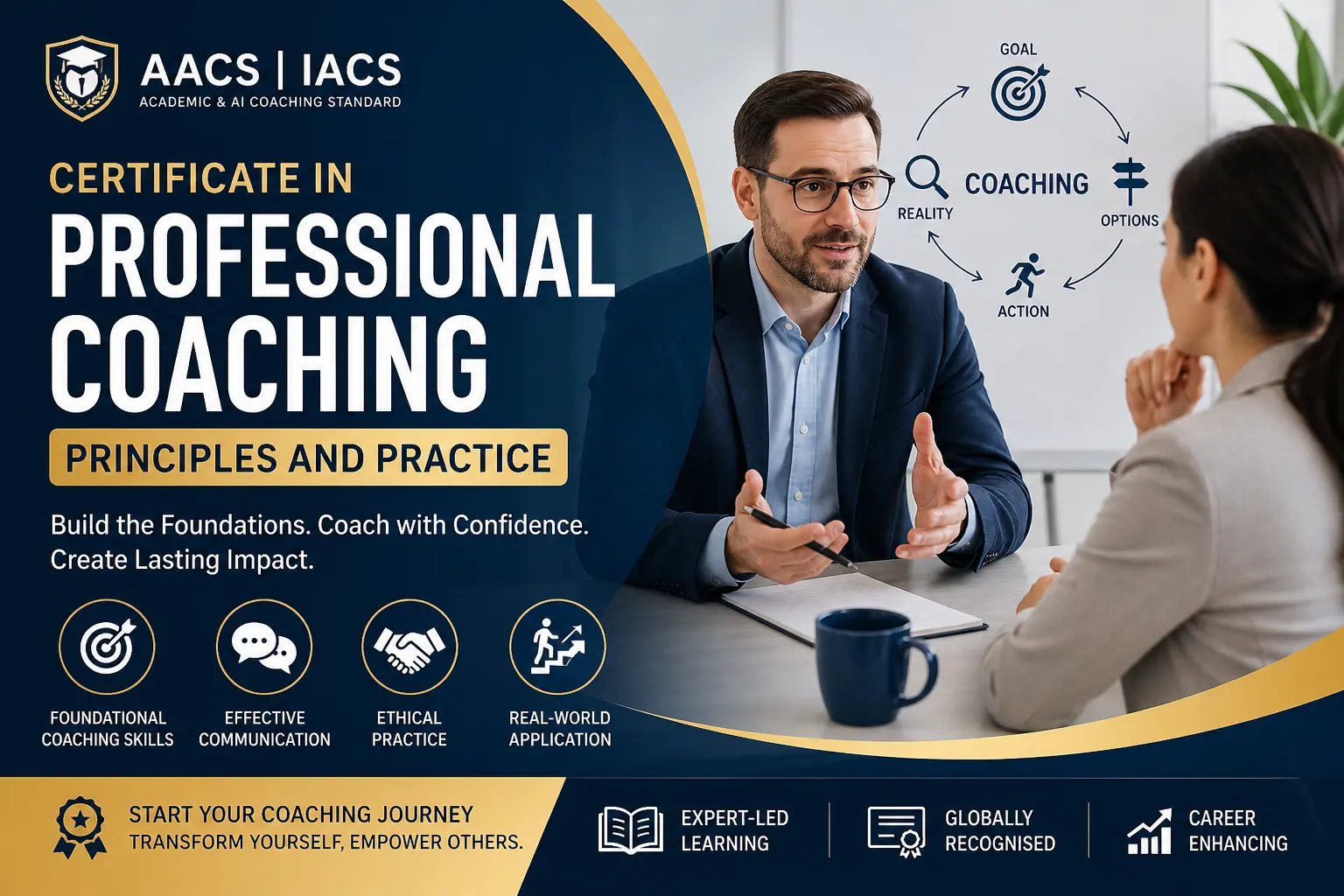
The Certificate in Professional Coaching Principles and Practice is a practical, professionally structured programme designed to help you develop essential coaching capability from the ground up. Whether you are an academic, professional, manager, or aspiring coach, this course provides the tools and confidence needed to conduct meaningful, structured coaching conversations.
Coaching is no longer limited to specialist roles. It has become a critical capability for anyone responsible for supporting performance, development, and growth. This certification enables you to move beyond informal advice and develop a disciplined, professional approach to coaching that delivers measurable outcomes.
What You Will Gain
This course focuses on practical application, ensuring that you can immediately use coaching techniques in real-world settings.
You will develop the ability to:
- Conduct structured coaching conversations with clarity and purpose
- Apply recognised coaching frameworks such as GROW and CLEAR
- Use active listening and powerful questioning to drive insight
- Maintain professional and ethical coaching standards
- Support individuals in achieving defined goals and outcomes
The emphasis throughout the programme is on usable skills, not theoretical knowledge alone.
Designed for Real-World Contexts
Unlike generic coaching courses, this certification is designed with modern professional environments in mind. You will learn how coaching applies to:
- Academic and educational settings
- Career development and transition
- Leadership and team performance
- High-pressure and performance-driven environments
This ensures that your learning is directly relevant and adaptable to your professional context.
A Structured and Practical Learning Experience
The course is built around a clear and progressive structure, combining:
- Core coaching principles
- Ethical and professional standards
- Communication and behavioural techniques
- Applied coaching scenarios and case-based learning
Each component is designed to help you move from understanding coaching concepts to confidently applying them in practice.
Professional Value and Career Relevance
Developing coaching capability enhances your ability to influence, support, and lead others effectively. This certification is particularly valuable for:
- Academics and educators supporting students and colleagues
- Managers and team leaders developing performance and engagement
- Professionals transitioning into coaching or advisory roles
- Individuals seeking to strengthen communication and interpersonal skills
As organisations increasingly prioritise development and performance, coaching skills are recognised as a key differentiator.
A Gateway to Advanced Coaching Pathways
This certification also serves as a foundation for progression into more advanced areas, including:
- Academic and research coaching
- AI-integrated coaching
- Leadership and organisational coaching
It provides the essential base required to build specialised expertise within a structured coaching framework.
Start Developing Coaching Capability That Delivers Results
The Certificate in Professional Coaching Principles and Practice equips you with the core skills and structured approach needed to coach effectively in today’s complex environments.
By completing this programme, you will not only understand coaching—you will be able to apply it with confidence, professionalism, and impact.
https://thecasehq.com/product/certificate-in-professional-coaching-principles-and-practice/?fsp_sid=6172
Comments
Post a Comment